
TM

Volume 3 Issue 12

DOLLHOUSES & MINIATURES
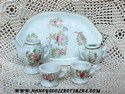
The first dollhouse is thought to be used by German royalty. The house in miniature was used as a teaching tool for young girls. The English had what was called "baby houses"
which were large cabinets used to replicate eighteenth and nineteenth century houses and accessories.
Early dollhouses were usually handmade for that special little girl. They sometimes consisted of one room and were filled with replica furniture that was scaled to fit the dollhouse.
Scaled dolls were also made to fit into the dollhouse, along with accessories that any full-sized home would have.
Dollhouses were commercially introduced in the country in the 1700's by a Dutch craftsman in the East. They were, initially, used by adults for amusement. They were very detailed,
divided into separate rooms, and had very lavish furnishings. In the late 1800's the use of the dollhouses changed from adults to children. Dollhouses commercially made by Schoenhut,
Strombecker, and Bliss are highly collectible and valued. Dollhouses can be found made of wood covered in litho paper, painted tin, and painted wood.
Some well-known makers for miniature furnishing and accessories are Renwal and Acme during the 40's , and Ideal's "Petite Princess" during the 60's. Even today there are craftsman
who specialize in making miniatures to scale for dollhouses. Prices vary according to specialization, material, and notoriety. Sizes for dollhouse furnishings and accessories range from
1/4" to 1". Many mediums are used for miniatures; copper, silver, wood, glass, porcelain, glass, paper, tin, plastic, etc. Even oil paintings and books printed in miniature can even be
found. Anything that can be found in or around the home can be found in miniature. Entire scenarious can be and are made involving dollhouses and the furnishings.
It seems that dollhouses and miniatures have come full circle and are becoming quite collectible by adults again.
To see some examples of dollhouses:
Victorian Farmhouse Dollhouse
Museum of Miniatures
To see some examples of miniature accessories:
Wood Miniatures
Food Miniatures
Floral Miniatures
RESOURCES
Garage Sale & Flea Market Annual - Third Edition
Schroeder's Antiques Price Guide - Eighteenth Edition,2000
Schroeder's Antiques Price Guide - Fourteenth Edition, 1996
Warman's Antiques and Collectibles Price Guide - 32nd Edition
Warman's Americana & Collectibles - 8th Edition
Next month's newsletter will feature "Christmas Collectibles".
Questions? Email Us!

SIGN UP HERE!
Mailing
List!




ACCEPTED!
Credit Card Payment Processing